Fleet operations · 8 min read
The hidden risk of a fleet nobody fully owns
When responsibility is spread across administration, finance, workshops, operations and drivers, important fleet risks can sit between teams.

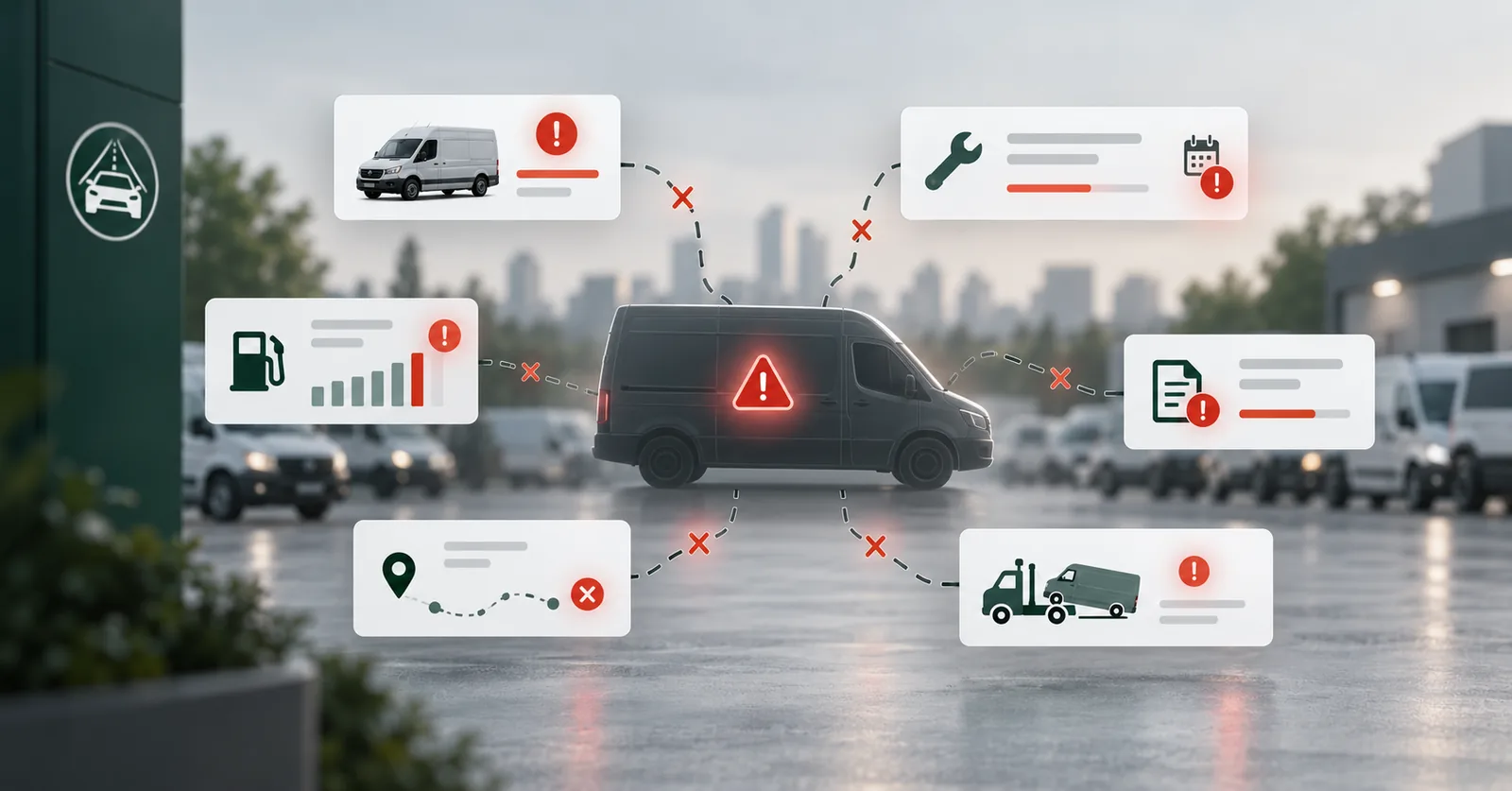
For many organizations, fleet is essential to the work but it is not the core business. That is exactly why ownership becomes fragmented.
Administration may hold documents. Finance sees fuel and repair spending. Workshops know the mechanical condition. Operations knows which vehicles are needed tomorrow. Drivers see issues first. Each team holds part of the truth, but nobody sees the whole operating picture.
GPS location is only one signal
Knowing where a vehicle is matters. It does not show whether the vehicle is roadworthy, whether its documents are current, whether a reported defect was resolved, or whether its operating cost is drifting in the wrong direction.
A fleet can be visible on a map and still be operationally invisible.
The risk lives in the gaps
When records and responsibility are disconnected, small issues become expensive surprises. A missed renewal becomes a compliance problem. An unresolved inspection fault becomes downtime. Repeated fuel exceptions become normalized. A vehicle expected for critical work turns out not to be ready.
Build one connected record
Operational control starts when the work around each vehicle is connected. Assignments, inspections, maintenance, fuel, incidents, approvals and documents should contribute to one current view of readiness.
This does not remove human judgment. It gives people better context: what changed, what is due, who owns the next action and which risks need attention first.
The practical question
The question is not simply “Where are our vehicles?” It is: “Are they safe, compliant, cost-effective and ready for the work they support?”